1A practical way to reduce ad spend is to build organic visibility for location-plus-business keywords and use ads where extra support is needed.
2
Y
About the author
Yongwoon LeeContent Lead, Cresco
At Cresco, designs how blog, local listing and Instagram content is run for clients such as clinics, and plans and reviews the articles on this blog.
Small-business marketing · SEO · AI search (GEO) · Naver Place · Content strategy
Related posts
Frequently asked questions
Are location-plus-business keywords worthwhile even with low search volume?+
Yes, especially for neighborhood businesses. Whether searchers are close enough to visit matters more than the total number of searches.
Is updating my business listing enough?+
Your listing is the foundation, but blog posts, photos, reviews, and menu information work together to give customers reasons to choose you.
Can I cut back on advertising?+
It depends on your industry and competition. First check whether you have established organic visibility for local keywords, then adjust how you use your ad budget.
How often should I mention the location in a blog post?+
Context matters more than repetition. The actual area you serve, the circumstances of a visit, and reasons for choosing a menu item or service should come through naturally.
Which metrics should I use to measure results?+
Look beyond listing views. Track directions requests, calls, saves, changes in reviews, and the search terms bringing visitors to your blog.
More specific local searches reveal clearer intent from customers who can actually visit, making them more useful for small service areas than broad business keywords.
3Use your business listing as the foundation, with consistent blog posts, photos, menus, and reviews, to give searchers enough information to choose you.
4Building local keyword visibility takes accurate business details and a growing record of trustworthy customer experiences, rather than repeated phrases.
5Confirm that organic visibility is established before reducing ads, then adjust for your industry and competition. Paid advertising may still be necessary.
6Track listing views alongside directions, calls, saves, review trends, and the search terms bringing visitors to your blog to decide whether you need more advertising or stronger search content.
For a neighborhood business, advertising usually pays for access to people searching nearby right now. The smaller your service area, the more valuable keywords combining a location with a business type become.
As searches get more specific, the intent to visit becomes clearer. When business listings, blog posts, reviews, and map information work together, advertising can become a supporting tool rather than the main source of discovery.
Lower ad spend starts with more focused search intent
A broad keyword like “restaurants” brings up many competing options and tells you little about the searcher's location or purpose. Searches such as “downtown brunch” or “Riverside nail salon” narrow the field considerably.
For small businesses, repeated visibility within customers' everyday travel area matters more than nationwide recognition. As that visibility builds, you have less need to pay for every first encounter through advertising.
Table: How keyword scope changes your marketing approach
Factor
Broad business keywords
Location-plus-business keywords
Search intent
More focused on gathering information
Closer to choosing somewhere to visit
Competition
Includes major brands
Centers on businesses in the actual service area
Role of content
Attract attention
Give customers reasons to choose you
Role of advertising
Secure visibility
Fill gaps in visibility
Local keywords may have low search volumes. But for a neighborhood business, whether a searcher can realistically visit matters more than the size of the audience.
Your business listing anchors local keyword visibility
In South Korea, Naver Place—a local business listing service within the Naver search platform—appears alongside maps, reviews, and blog content in local searches. Customers quickly compare locations, opening hours, photos, menus, and reviews. For a business in an English-speaking market, its local business listing serves a similar role.
If that listing lacks useful details, even an ad may leave customers without enough reasons to choose you. Accurate business information, helpful photos, and an up-to-date review history can help reduce drop-off after an ad click.
Public guidance from Naver Search Advisor, its website search guidance service, and Naver SmartPlace, its business listing management platform, points in the same direction: provide information search engines can understand, keep business details accurate, and make it easy for customers to see that information is current.
Long-tail visibility changes your reliance on ads
Reducing ad spend involves more than lowering the cost of a click. It means building a presence that remains in search results, so customer contact does not disappear whenever advertising stops.
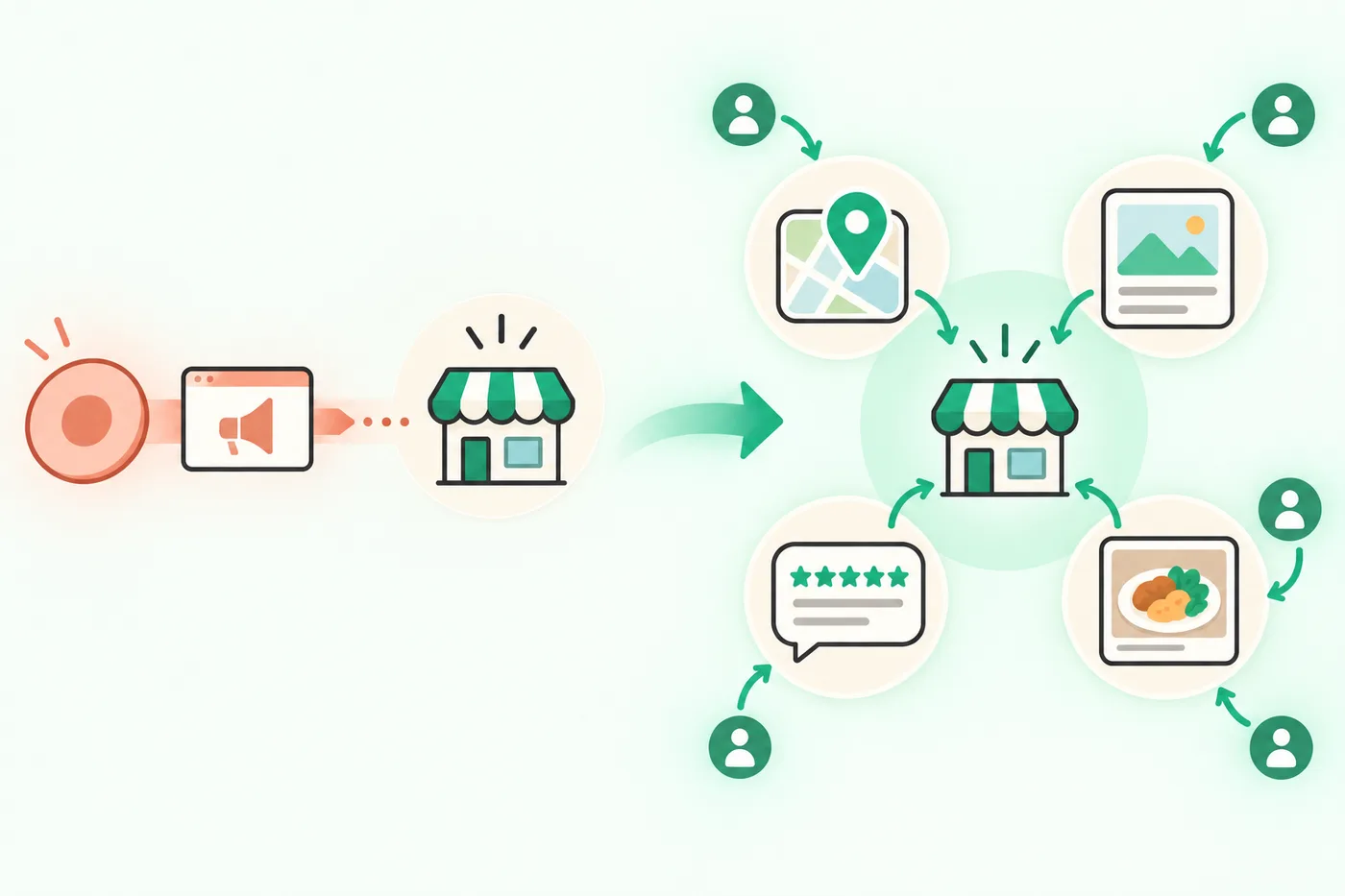
A single paid point of contact gives way to ongoing discovery through multiple forms of searchable content.
When a business listing, customer blog reviews, and the business's own content appear for location-plus-business searches, customers encounter the same business through several routes. Some of those encounters come from organic visibility rather than paid clicks.
This is where ongoing marketing support for local businesses can help. Alongside setting up ads, someone needs to consistently maintain the information that helps customers discover and evaluate the business in search results.
A small service area rewards precision
Businesses serving a small area have a harder time persuading distant customers to make the trip. Travel distance and immediate needs strongly influence decisions for salons, restaurants, clinics, tutoring centers, repair shops, and everyday services.
A local keyword strategy therefore focuses on reducing wasted reach. It gives people who could realistically visit more frequent exposure to clear reasons to choose your business.
Table: How local keyword visibility reduces dependence on ads
Stage
How it works
What it means for ad spend
Consistent information
Listing details match the actual customer experience
Less drop-off after a click
Growing content library
Blog posts, photos, menus, and reviews remain available in search
Less pressure to buy visibility every time
Repeated local exposure
Customers encounter the business repeatedly in searches for the same area
Greater likelihood of searches for the business by name
Targeted ad support
Ads support peak seasons, new menu items, or quiet time slots
A narrower scope for spending
Local visibility builds through ongoing signals
Getting established for local keywords takes more than repeatedly inserting a phrase. It requires business information that search engines can understand and a growing body of experience-based information that customers can trust.
Business details and customer experience signals build search visibility, with advertising filling the gaps.
Photos should show the real space and products. Blog posts should reflect the local area and the circumstances that bring customers in. Review management means responding in ways that address customer concerns, rather than making ratings look better than they are.
Advertising may still be necessary. But as your local keyword presence develops, the budget can shift toward filling specific gaps at particular times instead of supporting all incoming traffic.
Track the actions that lead to inquiries and visits
Total views alone can give a misleading picture of a local keyword strategy. What matters is which information helps customers discover your business through location-plus-business searches, and which routes lead to inquiries or visits.
Look at listing views alongside directions requests, calls, saves, review trends, and the search terms bringing readers to your blog. Together, these can help you decide whether you need more advertising or better information in search results.
The most practical way to lower ad spend is to build a foundation of organic visibility for the specific searches local customers use, then direct advertising toward the areas that need support.
FAQ
Q. Are location-plus-business keywords worthwhile even with low search volume?
A. Yes, especially for neighborhood businesses. Whether searchers are close enough to visit matters more than the total number of searches.
Q. Is updating my business listing enough?
A. Your listing is the foundation, but blog posts, photos, reviews, and menu information work together to give customers reasons to choose you.
Q. Can I cut back on advertising?
A. It depends on your industry and competition. First check whether you have established organic visibility for local keywords, then adjust how you use your ad budget.
Q. How often should I mention the location in a blog post?
A. Context matters more than repetition. The actual area you serve, the circumstances of a visit, and reasons for choosing a menu item or service should come through naturally.
Q. Which metrics should I use to measure results?
A. Look beyond listing views. Track directions requests, calls, saves, changes in reviews, and the search terms bringing visitors to your blog.